
- English
- Español
- Português
- русский
- Français
- 日本語
- Deutsch
- tiếng Việt
- Italiano
- Nederlands
- ภาษาไทย
- Polski
- 한국어
- Svenska
- magyar
- Malay
- বাংলা ভাষার
- Dansk
- Suomi
- हिन्दी
- Pilipino
- Türkçe
- Gaeilge
- العربية
- Indonesia
- Norsk
- تمل
- český
- ελληνικά
- український
- Javanese
- فارسی
- தமிழ்
- తెలుగు
- नेपाली
- Burmese
- български
- ລາວ
- Latine
- Қазақша
- Euskal
- Azərbaycan
- Slovenský jazyk
- Македонски
- Lietuvos
- Eesti Keel
- Română
- Slovenski
- मराठी
- Srpski језик

Why Is a Stationary Drone Jammer Becoming the Key to Securing Critical Infrastructure?
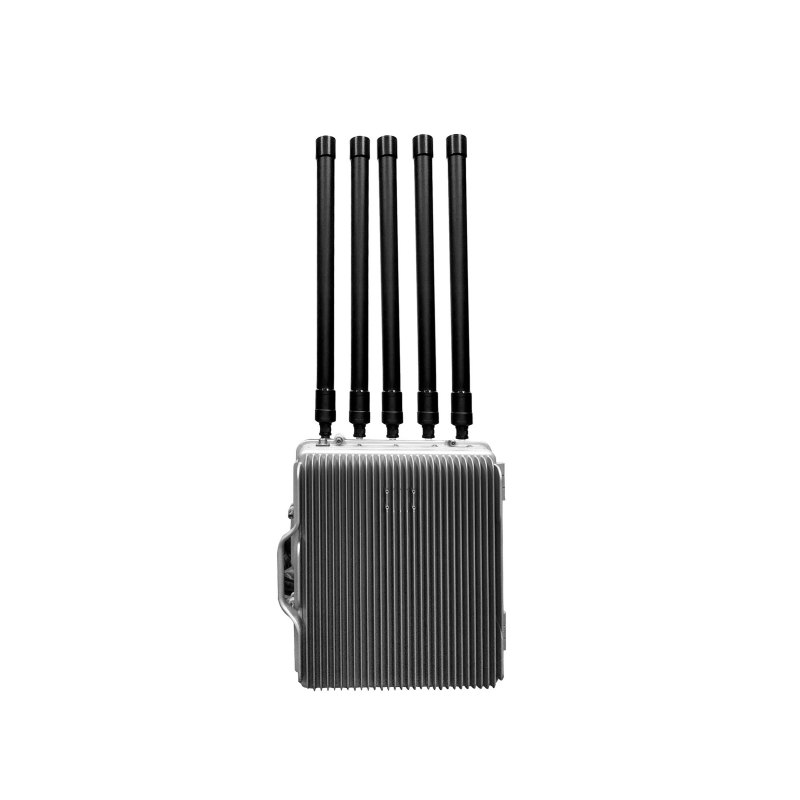
A Stationary Drone Jammer is designed as a fixed-installation counter-UAV system that disrupts unauthorized drone communications, navigation signals, and control links. As drone intrusions increase across airports, prisons, borders, energy plants, and public events, organizations are asking how a powerful long-range, always-on defensive solution can ensure continuous airspace security.
Product Overview and Technical Parameters
A high-performance Stationary Drone Jammer integrates multi-band interference modules, sector antennas, smart power control, and continuous 24/7 operational capability. It is engineered to disrupt common drone frequencies such as 2.4GHz, 5.8GHz, GNSS (GPS/GLONASS/Beidou), and selected command links, creating a protective no-fly zone around the installation site.
How Do Technical Specifications Influence Real-World Defense Performance?
Performance is determined by output power, channel configuration, antenna gain, operational modes, environmental endurance, and integration compatibility with existing surveillance systems.
Key Technical Parameters
| Parameter Category | Technical Description |
|---|---|
| Frequency Bands | 433MHz, 900MHz, 1.2GHz, 1.5GHz (GNSS), 2.4GHz, 5.8GHz, optional custom military bands |
| Output Power | 10–150W per channel depending on version |
| Total Channels | 4–10 channels available for different drone models |
| Jamming Range | 500m–5km (environment-dependent) |
| Antenna Type | Sectoral, omnidirectional, and directional high-gain antennas |
| Cooling System | Industrial-grade intelligent heat dissipation |
| Power Supply | AC 110/220V or dedicated power module |
| Protection Grade | IP65/IP67 outdoor weatherproof housing |
| Operation Mode | Continuous 24/7 interference, remote control available |
| Installation Mode | Wall-mounted, tower-mounted, rooftop, fixed pole |
| Integration Options | Works with radar, RF sensors, PTZ cameras, or command platforms |
These parameters form the foundation of stable long-term operation, enabling the jammer to create a persistent defensive perimeter without operator intervention.
Functional Advantages and Application Logic
How Does a Stationary Drone Jammer Create a Secure Airspace Zone?
By emitting controlled electromagnetic interference, the system blocks the data link between a UAV and its controller. Without communication or satellite positioning signals, the drone loses navigation capability and is forced into return-to-home, landing, or inoperability. This controlled disruption results in passive mitigation without physical destruction, making it suitable for civilian and governmental environments.
Core Functional Advantages
A. Multi-Band Interference Technology
Covers mainstream commercial drone frequencies, including GNSS bands, ensuring both control and navigation suppression.
B. Extended Operational Range
By utilizing high-gain directional antennas and robust power modules, coverage can exceed several kilometers, enabling large-facility defense.
C. 24/7 Autonomous Operation
Engineered for long-term installations with industrial cooling and surge protection, providing fixed-site security without manual intervention.
D. Seamless Integration With Monitoring Systems
The jammer interfaces with radar, electro-optical tracking systems, and command platforms to form a comprehensive counter-UAV network.
E. High Stability Under Harsh Environments
Dustproof, waterproof, and resistant to heat and cold, making it suitable for deserts, ports, mountains, industrial zones, and coastal areas.
Deep-Level “How” Questions Driving Industry Insight
How does beam direction influence interference precision?
A directional antenna concentrates energy on a specific sector, increasing range and reducing peripheral impact. Omnidirectional antennas protect wide areas uniformly but with shorter distances. Selecting the right antenna configuration depends on the landscape, facility layout, and threat direction.
How does output power change jamming effectiveness?
Higher power allows greater range but requires stronger heat dissipation and regulatory compliance. Optimizing power ensures effective blocking without unnecessary energy consumption.
How does channel design affect compatibility with new drone models?
Modern drones adopt adaptive frequency hopping and encrypted communication. A multi-channel system capable of disrupting baseline frequencies and advanced protocols ensures future readiness.
How do AI-based detection systems enhance jammer efficiency?
When integrated with radar and RF mapping tools, AI algorithms classify drone models and automatically activate the required interference channels, reducing operator workload.
Application Scenarios
Airports and Restricted Airspace
Prevents drone interference with takeoff/landing activities and protects aircraft routes.
Prisons and Correctional Facilities
Stops drones from delivering contraband or surveilling secure areas.
Energy Infrastructure
Protects nuclear facilities, oil refineries, power grids, substations, and solar farms.
Government and Military Bases
Prevents reconnaissance or unauthorized aerial intrusion.
Border Defense
Blocks smuggling drones and enhances perimeter security for checkpoints.
Public Events and Urban Spaces
Adds a protective buffer around stadiums, conferences, parades, and temporary high-risk gatherings.
Two Common Questions About Stationary Drone Jammers
Q1: How does a stationary jammer avoid interfering with nearby communication systems?
A1: Interference modules are carefully calibrated to operate only within designated frequency bands used by commercial drones. Directional antennas further ensure that energy is confined within the intended defensive perimeter. When integrated with RF detection systems, the jammer activates only when a drone signal is confirmed. These controls allow protection while minimizing impact on civilian or industrial wireless communication environments.
Q2: How do weather and installation height influence jamming range?
A2: Heavy rain, dense humidity, and physical obstructions can attenuate RF signals and reduce effective distance. Elevating the jammer—such as mounting it on towers or rooftops—enhances line-of-sight, enabling longer distances and more uniform coverage. Antenna placement, angle, and terrain analysis are therefore crucial during installation planning.
Future Trends in Stationary Drone Jamming Technology
Trend 1: Integration With Autonomous Detection Networks
Future systems will rely on radar fusion, RF sensors, AI classification, and automatic response mechanisms. This allows real-time adaptive jamming for multi-drone incursions.
Trend 2: Development of Smart Power Management
Adaptive energy control will reduce heat load, improve efficiency, and extend device lifespan.
Trend 3: Expansion to Counter Swarm Drones
Next-generation jammers will integrate wide-band interference with rapid channel switching to address coordinated swarm attacks.
Trend 4: Modular Architecture for Scalable Defense
Modular jamming towers will allow facilities to expand coverage as threats evolve, supporting easy maintenance and customization.
Trend 5: Wider Global Demand Driven by Regulations
More countries are enforcing UAV flight restrictions, increasing demand for fixed-site electronic countermeasures across public safety, critical infrastructure, and national defense sectors.
Conclusion and Brand Mention
A Stationary Drone Jammer plays a vital role in protecting restricted airspace, defense zones, and high-risk facilities. Its combination of multi-band interference, long-range coverage, stable 24/7 operation, and integration compatibility positions it as a core tool for comprehensive drone-mitigation strategies. As drone technologies evolve, fixed-site jamming systems will continue adapting to new communication protocols, multi-drone incursions, and intelligent detection networks. Organizations seeking reliable airspace protection should consider systems engineered with robust power output, weatherproof construction, and multi-channel architecture to ensure long-term security and compliance.
Shenzhen Rongxin Communication Co., Ltd provides advanced stationary drone-jamming solutions built for demanding global applications. For detailed specifications, integration support, or customized project inquiries, contact us to obtain professional guidance and secure your facility with long-range fixed-site protection.